Go beyond their behaviors.
- Take a 15 min quiz
- Discover how they’re wired
- Learn what drives their behavior
- Try personalized insights today that help your child in their hardest moments
No labels. No diagnoses. We never sell your data.
Start with your child See a sample profile
Free while we test it & receive your feedback. Afterwards, profiles will be $24.
Who’s behind it
We’re Matt and Natalie. Parents, and partners in life and in business.
As we’ve raised our kids through both joys and meltdowns, the latter often had us saying: “I don’t know what to do anymore.” We’ve felt helpless, and exhausted as if we were searching for answers in the dark... learning to understand our kids has turned the lights on.
How They’re Wired was built to equip parents to navigate those difficult moments. Natalie spent a decade at leading tech companies learning what makes a great product good for people. Matt is a data scientist who has spent his career turning data into insights.
We didn’t want a label for our kids. We wanted to understand them and help them thrive. If you want that too, you can reach us at info@howtheyrewired.com.

How it works
- Quiz
Spend 15 minutes telling us about your child
A quiz about your child’s everyday moments. Answer the way things really are, and the profile will fit better. There are no right answers.
- Profile
Discover what’s underneath their behaviors
The in-depth profile of your child describes their characteristics in plain words, cites applicable research & supports its claims so you don’t have to wonder.
- Insights
Receive personalized insights to equip your child to thrive
The profile identifies which experiences can be difficult for your child & provides insights or practices you can use today to help your child thrive.
- Support
We’re with you all the way
We check in one week later to find out what you tried, how it went & what support your family needs.
What it looks like

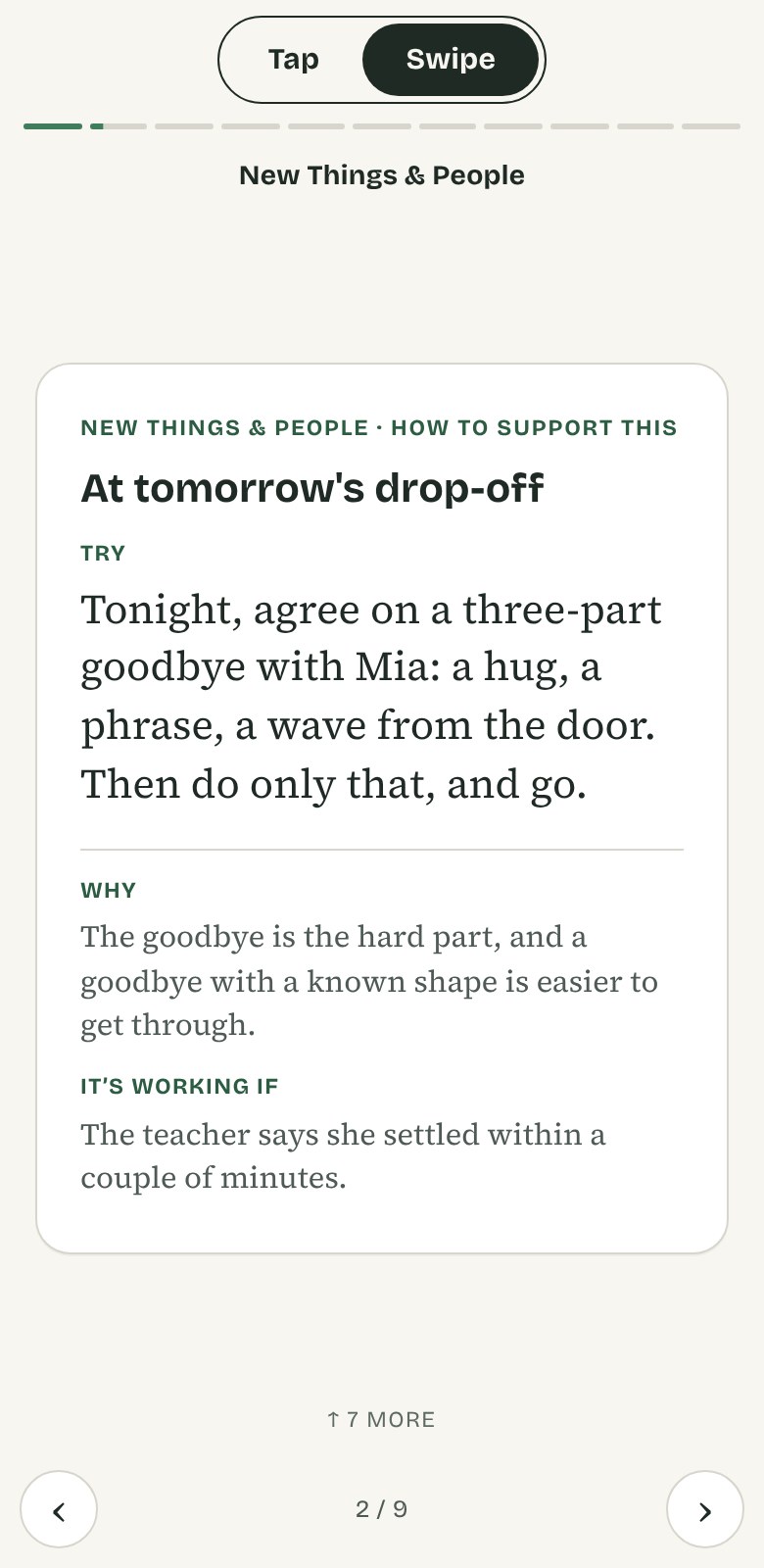
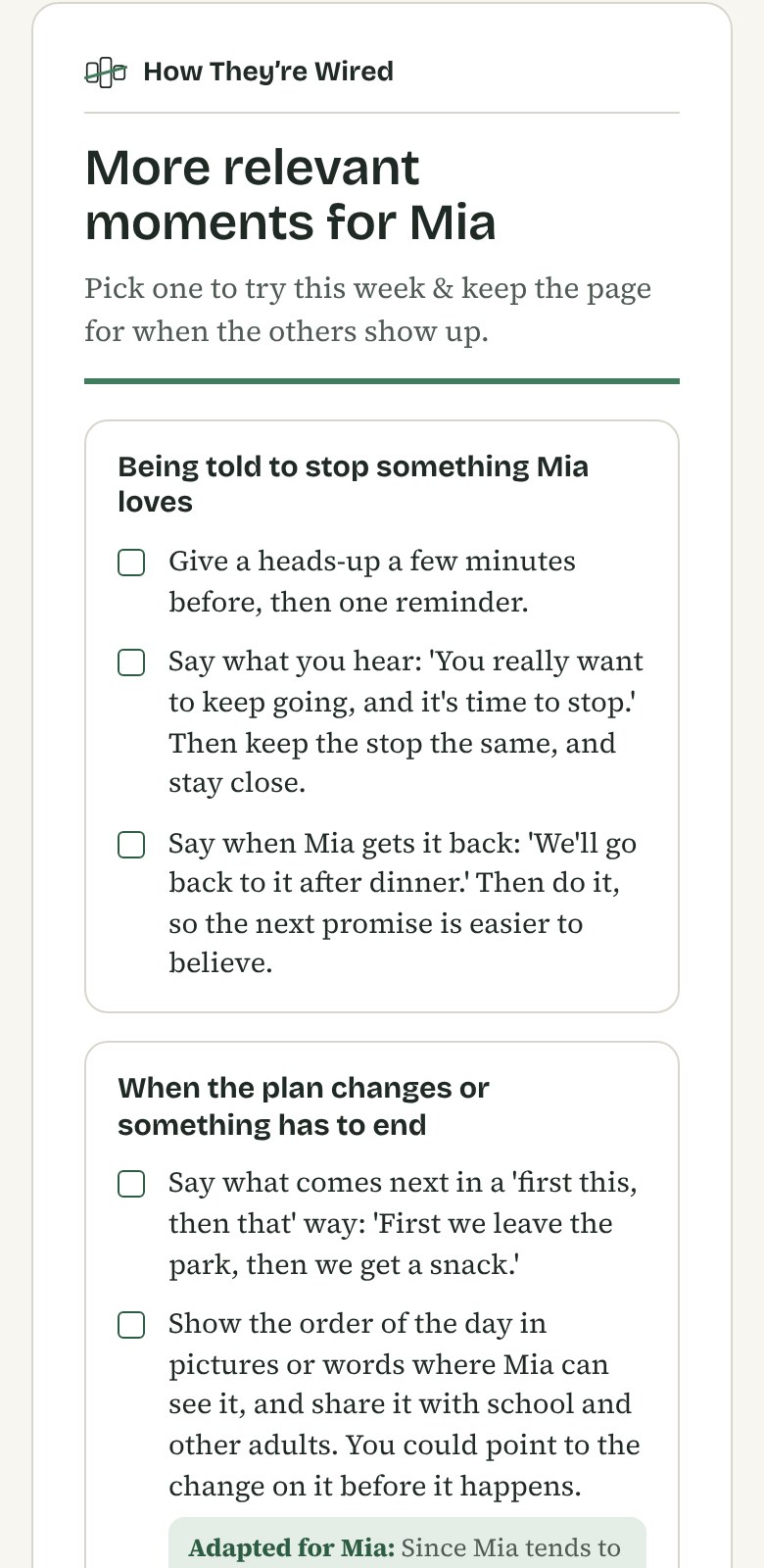
What it's built on
The profiles draw on decades of research into how children differ in temperament, such as how they approach new things, how strongly they react, how they adapt, and how sensitive they are to their surroundings. The claims in the profile cite the specific research that supports them, and every research study is listed in our Sources page. The profile also references answers from your quiz that inform the claim so that if it doesn't quite seem to fit your kid, you'll know why.
Where we are. The temperament research is well-developed but the tool we've built to give tailored access & advice is in its early stages. We will continually work to improve both the profile and the actionable insights. You're a key part of this stage: thank you for testing with us & providing feedback, which is crucial to improving profiles. We hope your child's free profile meaningfully impacts your family just like it did for ours. After the feedback stage is complete, we will offer profiles at a one-time cost of $24. If you're curious about the underlying research you can find all of it in our Sources page.
No label, type, or diagnosis
We describe how your child tends to be, in which situations, and what can help them thrive when things get difficult. Importantly, we also tell you what we can't know yet. Your child is not a category, so we will not lump them into one. Nothing here is a clinical tool and should not be used as one. Read our statement.
Privacy
Your answers are saved & securely stored so you can come back to them.
- Adults only. The quiz should be taken only by adults.
- We never sell your data.
- Age in years only. We never ask for a specific birthday.
- Delete anytime. You can delete all your data by asking.
- Never used for marketing without your direct consent.
Ready when you are.
15 minutes, mostly multiple choice. You can pause and come back.